
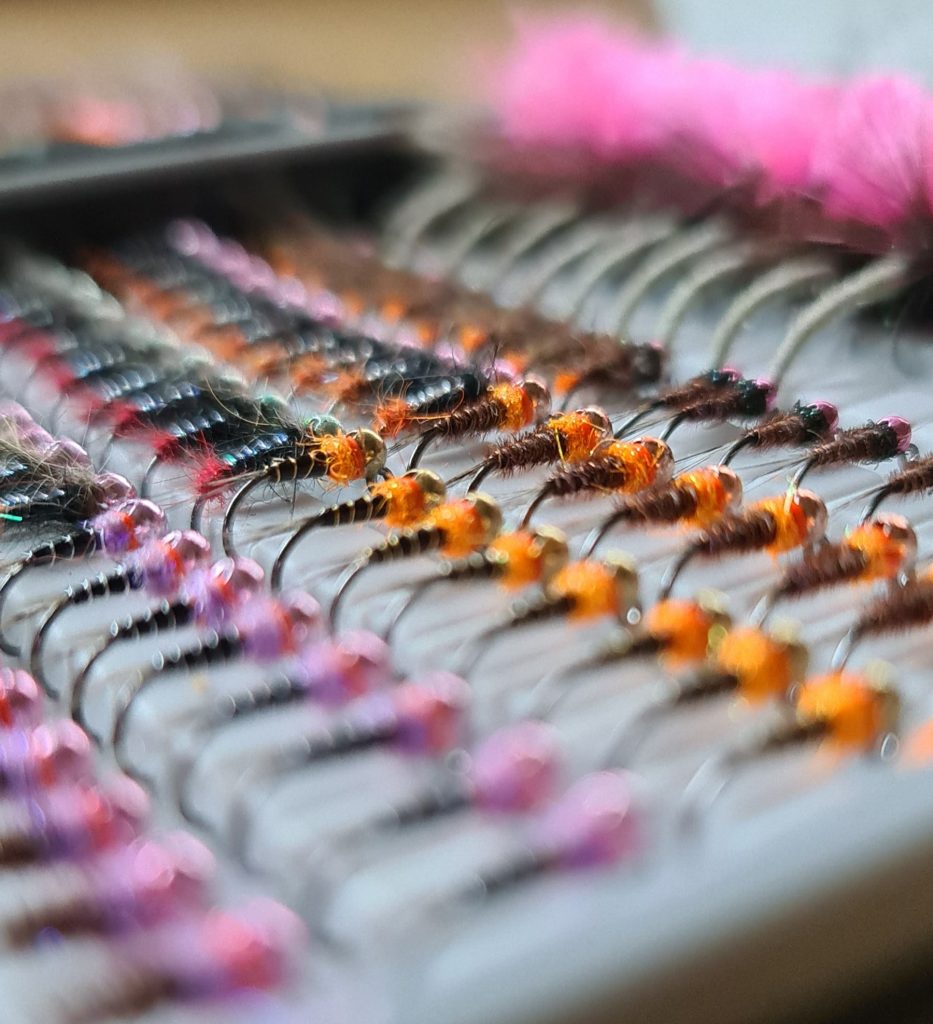
Scotland is blessed with thousands of miles of trout rivers and over 30,000 lochs and lochans, making it one of the finest destinations in the world for wild brown trout fishing. However, one question I am asked more than any other is:
“What fly should I use?”
The truth is that there is no single magic fly. Successful trout anglers learn to match their fly selection to the season, the water type, weather conditions, and the food sources available to the fish at that particular time.
In this guide, we’ll look at the best fly patterns for Scotland’s rivers and lochs throughout the trout season.
Early Season (March – April)
As Scotland’s trout season opens, water temperatures are still cold, and insect activity can be limited. Wild brown trout are often found deeper in the water column and are eager to feed after a long winter. Early-season fishing is usually at its best with nymphs and traditional wet flies.
Best River Flies
- March Brown
- Silver March Brown
- Black Spider
- Snipe and Purple
- Blue Dun
- Pheasant Tail Nymph
- Hare’s Ear Nymph
March Browns and Dark Olives are often the first significant hatches of the season and can bring trout to the surface during milder days.
Best Loch Flies
- Kate McLaren
- Black Pennell
- Zulu
- Bibio
- Dunkeld
- Gold Ribbed Hare’s Ear
Fishing teams of traditional wet flies from the bank or a drifting boat can be highly effective during spring, particularly when a breeze is creating wave action across the loch.
Prime Time (May – June)
Many anglers consider May and June the finest months of the year for wild brown trout. Water temperatures rise, insect life explodes, and trout feed aggressively on the surface. Large hatches become common on both rivers and lochs.
River Fly Selection
During Mayfly Hatches
Where mayflies are present, trout can become completely focused on them. Large dry flies often produce spectacular surface action.
Recommended patterns:
- Mayfly Dry
- Grey Wulff
- Klinkhammer
- CDC Mayfly Emerger
- Parachute Adams
General River Dry Flies
- Elk Hair Caddis
- Greenwell’s Glory
- Blue Winged Olive
- March Brown Dry
- Adams
- CDC Emergers
When trout begin rising consistently, matching the size and profile of the natural insects is often more important than the exact pattern.
Loch Fly Selection
Lochs come alive during late spring.
Top patterns include:
- Bibio Hopper
- Claret Bumble
- Black Hopper
- Cruncher
- Diawl Bach
- Kate McLaren
- Sedge Patterns
Many Scottish anglers find that hoppers and bushy attractor flies work exceptionally well during warmer conditions, particularly when trout are feeding close to the surface. Community reports from Scottish anglers regularly highlight Bibio and Olive Hoppers as productive patterns on wild brown trout lochs.
Summer Fishing (July – August)
Summer fishing can be challenging but incredibly rewarding. During bright conditions, trout often feed early in the morning and late into the evening. The famous Scottish sedge hatches can provide some of the most exciting dry-fly fishing of the season.
Best River Flies
- Elk Hair Caddis
- CDC Sedge
- Klinkhammer Special
- Black Ant
- Beetle Patterns
- Small Hoppers
- Pheasant Tail Nymph
Terrestrial insects become increasingly important during summer, especially on smaller Highland rivers.
Best Loch Flies
- Bibio Hopper
- Claret Hopper
- Deer Hair Sedge
- Shipman’s Buzzer
- Diawl Bach
- Cruncher
Evening fishing can be exceptional when trout move into the margins to intercept emerging sedges and buzzers.
Autumn Fishing (September – October)
As temperatures begin to cool, trout often feed heavily before spawning. Daytime hatches can return, and fish become more willing to chase larger food items.
River Flies
- Blue Winged Olive
- CDC Emergers
- Pheasant Tail Nymph
- Hare’s Ear Nymph
- Small Streamers
Loch Flies
- Diawl Bach
- Cruncher
- Black Pennell
- Kate McLaren
- Mini Lures
Autumn can produce some of the largest wild brown trout of the year, particularly on lochs where trout begin feeding aggressively before the season closes.
River vs Loch Fly Selection
Rivers
Wild river trout often demand a more natural presentation.
Focus on:
- Nymphs
- Soft Hackles
- CDC Emergers
- Dry Flies matched to hatches
Stealth, presentation, and reading the water are usually more important than changing flies every few casts.
Lochs
Loch trout are generally more opportunistic.
Successful patterns often include:
- Hoppers
- Bibios
- Buzzers
- Diawl Bachs
- Traditional Wet Flies
- Sedge Patterns
Fishing with a team of flies allows anglers to cover multiple food sources and depths simultaneously.
My Essential Scottish Wild Brown Trout Fly Box
If I could only carry a small selection of flies for Scotland’s rivers and lochs, it would include:
- Elk Hair Caddis (Sizes 12–16)
- March Brown (Sizes 12–14)
- Bibio Hopper (Sizes 10–12)
- Diawl Bach (Sizes 12–16)
- Pheasant Tail Nymph (Sizes 14–18)
- Hare’s Ear Nymph (Sizes 12–16)
- CDC Emerger (Sizes 14–18)
- Klinkhammer Special (Sizes 12–16)
- Kate McLaren (Sizes 10–12)
- Black Spider (Sizes 14–16)
These patterns will catch wild brown trout virtually anywhere in Scotland, from the smallest Highland burn to the largest loch.
Final Thoughts
The best fly selection for wild brown trout in Scotland is not about carrying hundreds of patterns. It is about understanding the season, observing insect activity, and presenting a fly naturally.
Whether you’re fishing a remote Highland lochan, a famous trout river, or exploring a hidden burn, confidence in a handful of proven patterns will consistently outfish a box full of flies you don’t trust.
At You Fish Scotland, we help anglers learn not only where to fish, but also how to choose the right flies, read the water, and understand trout behaviour throughout the Scottish season.
Recent Comments