
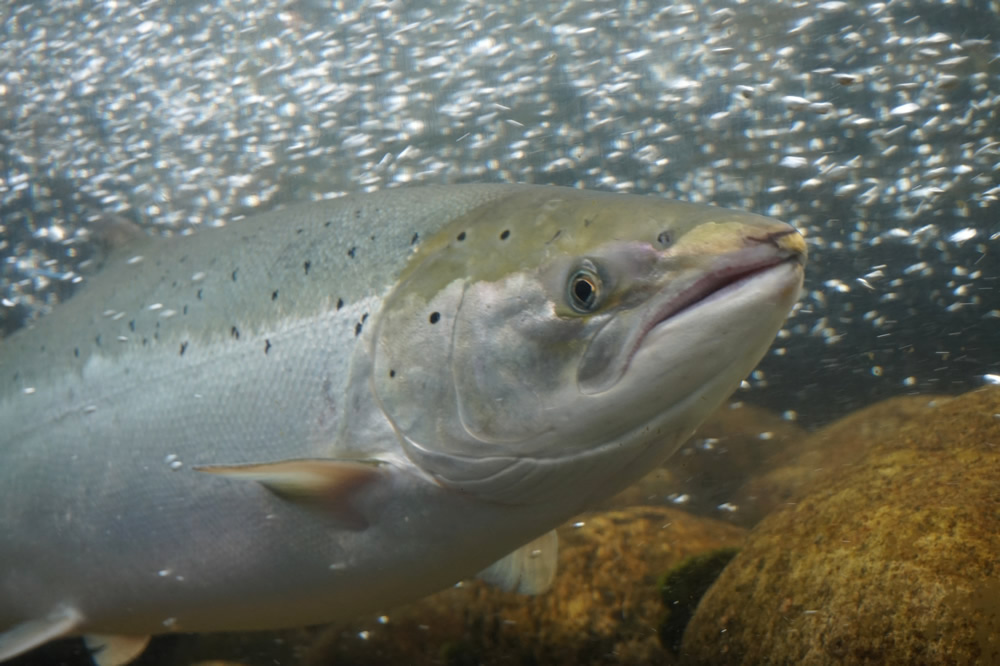
Scotland’s wild Atlantic salmon are in serious trouble. For those of us who live and breathe our rivers, this is not news—it’s something we see with our own eyes every season. But the scale of the decline is now undeniable, and the response from those in power simply does not match the urgency of the crisis.
A Species in Freefall
Since the 1970s, the number of salmon returning to Scottish rivers has fallen from around one million fish to roughly 400,000.
More alarmingly, recent data shows catches dropped by around 40% in 2025 alone.
Wild Atlantic salmon are now officially classified as endangered in Great Britain, following steep declines of 30–50% in recent decades.
This is not a gradual change—this is a collapse.
For anglers, ghillies, and river communities across Scotland, the difference is stark. Rivers that once held strong, consistent runs are now shadows of what they used to be.
The Reality on Our Rivers
Salmon are more than just a fish—they are a barometer of the health of our entire ecosystem. When salmon struggle, everything connected to them is under pressure.
Across Scotland:
- 72% of rivers are now classified as being in poor conservation status for salmon
- Some monitored rivers have seen returns drop to almost nothing
- Marine survival has fallen dramatically, in some cases to as low as 1–5%
This is not one single issue. It is a combination of pressures—climate change, habitat loss, predation, aquaculture, and crucially, barriers within our rivers themselves.
Hydroelectric Dams – A Hidden but Major Problem
One of the most overlooked contributors to salmon decline in Scotland is the sheer number of hydroelectric dams controlling our waterways.
Dams and water abstraction schemes:
- Block or delay migration routes
- Destroy or alter the spawning habitat
- Change water temperature and chemistry
- Reduce natural river flows
Scientific studies on dammed systems in Scotland have shown:
- Salmon numbers are dropping by more than tenfold in some rivers
- Up to 40% of natural habitat lost or altered
- Entire stretches of river are left without spawning fish
Even where mitigation, such as fish passes, exists, they are often ineffective or poorly designed. In some cases, expert advice to protect salmon was ignored entirely during dam construction.
Quite simply, salmon need free-flowing rivers. And Scotland has fewer of those than people realise.
Government Response – Not Good Enough
The Scottish Government itself recognises that over 40 different pressures are affecting wild salmon.
Yet despite this:
- There is no decisive national strategy tackling hydro impacts at scale
- Regulation around river barriers remains inconsistent
- Conservation funding, while welcome, is small compared to the scale of the problem
Meanwhile, major decisions continue to prioritise industry, infrastructure, and short-term economics over long-term ecological survival.
There has been talk of inquiries, new licences, and further studies—but what salmon need right now is action, not more discussion.
Why This Matters
Wild salmon are not just part of Scotland’s natural heritage—they are vital to rural economies, supporting jobs, tourism, and communities across the country, contributing over £100 million annually.
But beyond economics, they are part of who we are.
Lose the salmon, and we lose:
- A connection to our rivers
- A cornerstone of our ecosystems
- A tradition that has existed for generations
What Needs to Happen
If we are serious about saving wild salmon in Scotland, we need:
- A full review of hydroelectric dams and water abstraction
- Removal or redesign of barriers that block migration
- Properly functioning fish pass through every system
- Stronger protection of river flows and spawning habitat
- Real investment in river restoration at scale
Most importantly, we need accountability.
Final Thoughts
At You Fish Scotland, we spend our lives on these rivers. We don’t need reports to tell us what’s happening—we see it every day.
Fewer fish. Smaller runs. Changing rivers.
The decline of wild salmon is not a future problem—it is happening now.
The question is simple:
Are we willing to act before it’s too late?
Recent Comments