
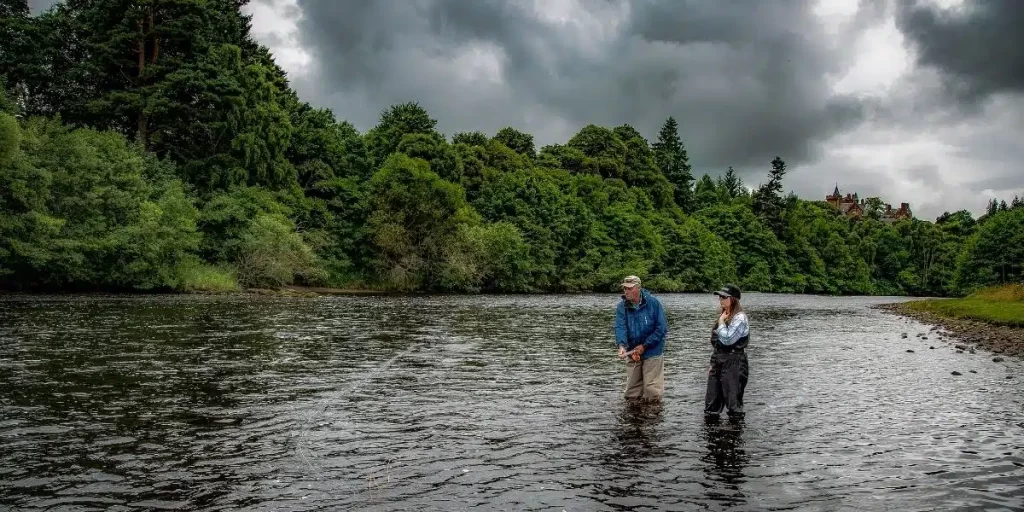
By You Fish Scotland – Inverness, Scottish Highlands
Salmon fishing in Scotland is more than a pastime. It is culture, history, livelihood, and connection to wild places that still feel untouched. Around Inverness, where rivers flow from peat-stained hill lochs to the Moray Firth, Atlantic salmon have shaped communities for centuries.
Yet today, salmon fishing sits at a crossroads. Catches are down, rivers are under pressure, and anglers are being asked to adapt. At the same time, science, conservation, and responsible angling are offering real reasons for hope.
This is an honest look at the good and the bad of salmon fishing in Scotland, what the future may hold, and how a complete beginner can start the journey the right way.
The Good: Why Salmon Fishing Still Matters
Despite challenges, salmon fishing in Scotland remains one of the most rewarding forms of angling anywhere in the world.
Why anglers are still drawn to it:
- Wild, self-sustaining fish in natural rivers
- Remote Highland locations with minimal pressure
- A strong culture of stewardship and respect for fish
- Catch-and-release is now widely accepted and practised
- A deep sense of tradition mixed with modern ethics
Rivers such as the River Spey continue to attract anglers from across the globe, not just for the chance of a fish, but for the experience of standing in a living system shaped by time, weather, and migration.
The Bad: Declining Salmon Numbers – A Hard Truth
There is no avoiding the reality: Atlantic salmon numbers are declining across much of their range, including Scotland.
The main pressures include:
- Marine survival issues in the North Atlantic
- Climate change is affecting river temperatures and flows
- Habitat loss and barriers to migration
- Predation pressures
- Historical over-exploitation
This has led to:
- Reduced seasons on some rivers
- Mandatory catch-and-release regulations
- Limits on fishing effort during low water or high temperatures
For anglers, this can feel frustrating. For the fish, it is necessary.
Science, Biologists & Why There Is Real Hope
The future of salmon fishing in Scotland is now inseparable from science-led management.
Across the Highlands, the Ness fisheries biologists are:
- Monitoring juvenile salmon populations
- Tagging smolts to track marine survival
- Restoring spawning habitat and riparian zones
- Removing or modifying migration barriers
- Using data-driven rod-catch limits
What many anglers don’t see is that rod catches are no longer the primary driver of salmon decline. Modern salmon angling, when done responsibly, is part of the solution, not the problem.
The future likely holds:
- Shorter but better-managed seasons
- Continued emphasis on catch and release
- More education-led angling
- A stronger connection between anglers and conservation
Salmon fishing may look different—but it is not disappearing.
Want to Start Salmon Fishing? Here’s Where to Begin
One of the biggest myths is that salmon fishing is only for experts. It isn’t—but starting correctly matters more than ever.
Step 1: Understand the Fish
Atlantic salmon are migratory, opportunistic, and unpredictable. Success isn’t measured only by fish landed—but by reading water, conditions, and timing.
Step 2: Get Proper Instruction (This Matters More Than Gear)
With modern conservation rules and increasingly pressured fish, learning from a qualified instructor is critical—not just for success, but for fish welfare, safety, and long-term enjoyment.
Look for instructors accredited by recognised professional bodies such as:
- Scottish Game Angling Instructors Certificate (SGAIC) – The gold standard for game angling instruction in Scotland
- Association of Professional Game Angling Instructors (APGAI) – Highly experienced instructors with advanced teaching and guiding standards
- Association of Advanced Professional Game Angling Instructors (AAPGAI) – The highest level of game angling qualification in the UK
- Fly Fishers International (FFI) – Internationally recognised fly-casting Instruction and fly-fishing education system
A qualified instructor will teach far more than casting distance. They will cover:
- Safe wading and river awareness
- Fish handling and ethical catch-and-release
- Reading salmon water properly
- Line control, depth, and swing speed
- Choosing the right cast for the conditions—not the flashiest
This foundation prevents bad habits that can take years to undo.
Step 3: Start Simple
You do not need to master everything at once:
- One rod
- One-line system
- One or two proven casts
- Focus on presentation, not power
Spey Casting: The Pros and Cons for Beginners
Spey casting is often seen as technical and intimidating—but in reality, it is one of the most efficient casting systems ever developed for salmon fishing.
✅ The Pros
- Minimal backcast space needed
- Safer in confined or tree-lined rivers
- Reduced physical strain over long days
- Ideal for big rivers and variable conditions
- Elegant, efficient, and repeatable
❌ The Cons
- Can feel overwhelming without qualified instruction
- Poor teaching leads to ingrained bad habits
- Too much emphasis on distance instead of control
- Not always required on small rivers
The biggest mistake beginners make is trying to self-teach complex Spey casts without guidance. A single lesson with a qualified instructor can save seasons of frustration.
Where Should You Start with Spey Casting?
Start with:
- A forgiving Scandi or multi-tip system
- One or two casts (Single Spey and Double Spey)
- Anchor placement before power
- Timing before distance
With structured instruction, most anglers are surprised by how quickly it clicks.
Salmon Fishing Today: More Than Just Catching Fish
At You Fish Scotland, we believe modern salmon fishing is about:
- Respecting the fish
- Understanding the river
- Fishing ethically and responsibly
- Accepting blank days as part of the journey
- Becoming part of conservation, not separate from it
The salmon owes us nothing. Every cast is a privilege.
Final Thoughts: A Future Worth Protecting
Salmon fishing in Scotland is changing—but it is not lost.
With science-led management, qualified instruction, and responsible angling, the future still holds:
- Wild fish
- Wild rivers
- And meaningful days on the water
If you are thinking about starting salmon fishing—or reconnecting with it more deeply—the best time isn’t “when stocks recover”.
The best time is now—when educated anglers matter more than ever.
Tight lines,
You Fish Scotland – Inverness, Scottish Highlands
Recent Comments