
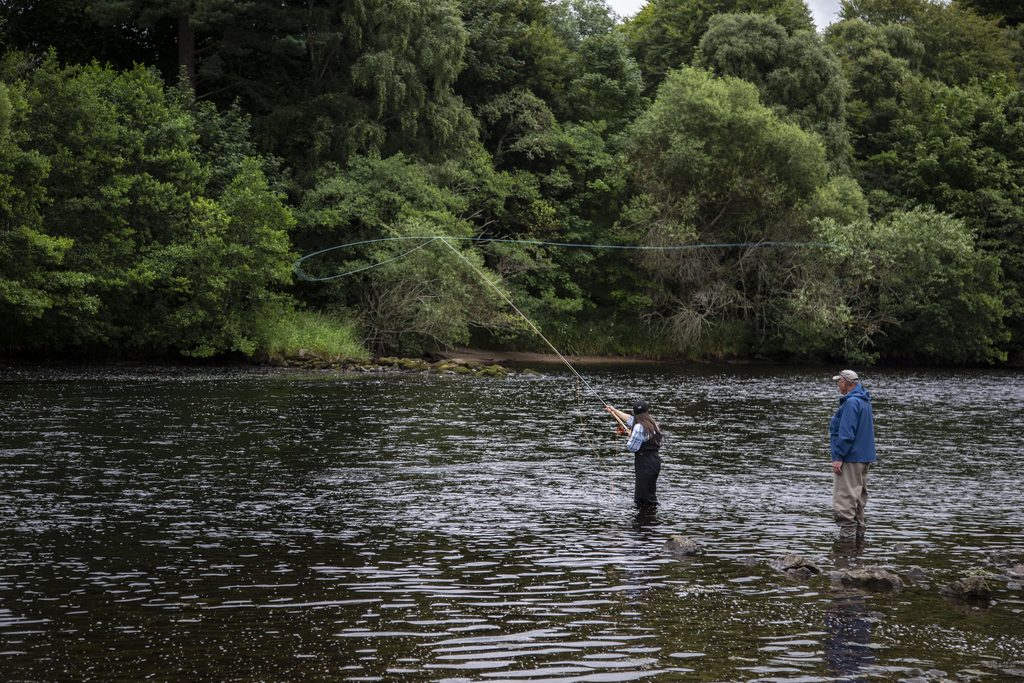
Discover the benefits of Spey casting, why it is an essential skill for Scottish rivers, and how learning both single-handed and double-handed techniques can transform your fly fishing.
Spey casting is one of the most effective and versatile techniques in fly fishing, particularly when fishing Scotland’s famous salmon and trout rivers. Whether you are an experienced angler looking to improve your casting or a complete beginner interested in learning something new, understanding Spey casting can open up a world of opportunities.
At You Fish Scotland, we regularly encounter anglers who want to improve their casting technique, become more confident on rivers, and learn how to fish effectively in challenging conditions.
In this Q&A guide, we explore single-handed and double-handed Spey casting, its advantages, and why learning these techniques can make you a more capable and confident fly angler.
What is Spey casting?
Spey casting is a fly casting technique that allows anglers to change direction and deliver a fly without requiring a traditional backcast.
Instead of moving the fly line behind the angler, Spey casting uses water-based anchors and controlled movements to load the rod before delivering the line forward.
This makes it particularly useful when fishing rivers with limited space behind you, overhanging trees, steep banks, or challenging river conditions.
Spey casting originated in Scotland, particularly around the River Spey, and has become an internationally recognised technique for salmon, sea trout, and other river species.
Q&A: Understanding Spey Casting
What is the difference between single-handed and double-handed Spey casting?
The primary difference is the type of rod used and the way the casting movement is performed.
Single-handed Spey casting uses a conventional fly rod held in one hand. It is particularly effective for trout, smaller salmon rivers, and situations where precision and versatility are important.
Double-handed Spey casting uses a longer rod held with both hands. This provides additional leverage, control, and casting potential, making it especially useful for salmon fishing on larger rivers.
Both techniques use similar principles involving anchor placement, rod loading, line control, and efficient casting movements.
Can you Spey cast with a single-handed fly rod?
Absolutely.
Single-handed Spey casting is an increasingly popular technique that allows anglers to fish effectively without needing a double-handed rod.
It is particularly useful when fishing:
- Scottish rivers with restricted backcasting space.
- Wild brown trout streams and rivers.
- Small and medium-sized salmon rivers.
- Rivers with overhanging vegetation.
- Water where changing casting direction frequently is necessary.
Learning single-handed Spey casting can significantly improve your ability to fish efficiently in difficult surroundings.
Why should I learn double-handed Spey casting?
Double-handed Spey casting offers several important advantages, especially when targeting Atlantic salmon.
The longer rod and two-handed casting technique allow anglers to control longer lengths of fly line, cover wider sections of river, and maintain greater control over their presentation.
Benefits include:
- Increased casting distance when conditions allow.
- Improved line control and management.
- Greater efficiency when fishing large rivers.
- Reduced need for a conventional backcast.
- Better opportunities to fish effectively in windy conditions.
- Less unnecessary physical effort when casting efficiently.
However, distance is not everything. Good Spey casting is about presenting the fly accurately, controlling the line, and fishing the water effectively.
Is Spey casting difficult to learn?
Spey casting can initially appear complicated, particularly when watching experienced anglers effortlessly deliver long casts across a river.
However, with the correct instruction, the fundamentals are relatively straightforward to understand.
The key elements include:
- Understanding the casting anchor.
- Learning the importance of the D-loop.
- Developing the correct rod path.
- Understanding line tension and rod loading.
- Controlling the timing and direction of the cast.
Learning these fundamentals properly from the beginning can prevent common casting faults and help you progress more quickly.
A qualified instructor can identify mistakes that may otherwise go unnoticed and help develop good casting habits.
What is the D-loop in Spey casting?
The D-loop is the loop of fly line formed behind the angler before the forward cast.
It plays a crucial role in loading the rod and generating the energy required to deliver the fly line.
A properly formed D-loop is essential for an efficient Spey cast.
The shape, size, and position of the D-loop influence the quality of the cast, making it one of the most important elements to understand when learning Spey casting.
Can Spey casting help when fishing for Atlantic salmon in Scotland?
Yes. Spey casting is particularly valuable when fishing for Atlantic salmon throughout Scotland.
Many Scottish salmon rivers have limited space behind the angler, making traditional overhead casting difficult or impractical.
Spey casting allows anglers to fish effectively in these conditions while maintaining control over the fly line.
It is particularly useful when fishing:
- The River Spey.
- The River Ness.
- The River Tay.
- The River Dee.
- Other Scottish salmon rivers with restricted casting space.
Being able to perform both single-handed and double-handed Spey casts gives anglers greater flexibility when adapting to different rivers and fishing conditions.
What are the benefits of learning both single-handed and double-handed casting?
Learning both techniques can make you a much more versatile fly angler.
Single-handed casting is excellent for precision, smaller rivers, and trout fishing, while double-handed casting provides additional reach and line control for larger rivers and salmon fishing.
Understanding both techniques also improves your overall casting knowledge.
You develop a better understanding of rod loading, line tension, timing, anchor placement, and presentation.
These skills can transfer into other areas of fly fishing, helping you become a more confident and technically competent angler.
Do I need expensive equipment to learn Spey casting?
No.
Having suitable equipment is important, but you do not necessarily need the most expensive rod or reel available.
The correct rod, line, and leader combination should suit your casting ability, the fishing conditions, and the species you intend to target.
A properly matched outfit can make learning significantly easier.
Before purchasing equipment, it is worth speaking with an experienced and qualified instructor who can help you understand what is appropriate for your needs.
Should I learn Spey casting from a qualified instructor?
Learning from a qualified instructor is strongly recommended.
Casting faults can become deeply ingrained when anglers attempt to teach themselves, particularly when learning more advanced techniques.
A qualified instructor can provide structured guidance, demonstrate correct technique, identify faults, and help you develop a more efficient casting style.
When choosing a fly casting instructor, always ask about their qualifications, experience, and professional standards.
Professional qualifications demonstrate that an instructor has undertaken assessment and training, although they should always be considered alongside practical experience and teaching ability.
Why learn Spey casting in Scotland?
Scotland offers an exceptional environment for learning and developing Spey casting.
From the iconic River Spey to the beautiful rivers and streams of the Highlands, anglers have opportunities to develop their casting skills in some of the most inspiring fishing surroundings in the world.
Learning Spey casting in Scotland also allows you to understand how casting technique relates directly to river conditions, water levels, wind direction, and fishing situations.
It is not simply about learning to cast further. It is about understanding how to fish more effectively.
Learn Spey Casting with You Fish Scotland
At You Fish Scotland, we believe good fly fishing instruction should focus on understanding, confidence, technique, and enjoyment.
Whether you are interested in single-handed Spey casting, double-handed salmon casting, or improving your overall fly fishing ability, developing your skills with professional instruction can make a significant difference.
Our fly fishing experiences and instruction take place in the beautiful Scottish Highlands, around Inverness and beyond.
With professional qualifications including SGAIC, FFI Certified Instructor (CI), and FFI Two-Handed Casting Instructor (THCI), we place considerable importance on teaching standards, safety, and helping anglers develop their skills.
Whether you are new to fly fishing or an experienced angler looking to refine your casting, there is always something new to learn.
Contact You Fish Scotland to discuss fly fishing instruction, Spey casting, or a guided fishing experience in the Scottish Highlands.
Website: https://www.youfishscotland.com
Frequently Asked Questions About Spey Casting
What is Spey casting used for?
Spey casting is used to deliver a fly without requiring a conventional backcast. It is particularly useful for salmon and trout fishing on rivers with restricted casting space.
Is Spey casting only for salmon fishing?
No. Spey casting can be used for trout, sea trout, and other species. Single-handed Spey techniques are particularly useful for trout fishing.
Can beginners learn Spey casting?
Yes. Beginners can learn Spey casting with suitable equipment and structured instruction. Understanding the fundamentals early can help avoid common casting faults.
Is double-handed Spey casting better than single-handed casting?
Neither is universally better. Single-handed casting offers precision and versatility, while double-handed casting provides advantages when fishing larger rivers and covering wider water.
Where can I learn Spey casting in Scotland?
You Fish Scotland offers professional fly fishing instruction and guided experiences around Inverness and the Scottish Highlands.
Recent Comments